 Magyar
 English

How to manage the security risks of remote work
Misconfigurations, devices shared with family members, secure remote access: the main security risks of remote work, and how you can reduce them.
Practical articles on cloud, Linux operations, virtualisation and hosting – from our own projects and from industry news.
Misconfigurations, devices shared with family members, secure remote access: the main security risks of remote work, and how you can reduce them.

Ageing hardware, storage filling up, missing backups: steps that make your IT infrastructure more reliable and reduce the cost of downtime.

How SMBs can improve their security maturity without a big budget: talking through scenarios, visibility (SIEM) and multi-factor authentication.

PHP 7.4 reaches EOL on 28 November 2022, with no more security fixes after that. Which version to move to, what can break, and how to upgrade on cPanel.

What RAID means, how RAID 0, 1, 5, 6 and 10 differ, how much usable storage you are left with, and which RAID level to choose for a server.
Windows 10 21H2 reached end of life in June 2023, and support for all of Windows 10 ended in October 2025. What does this mean for your computers?

What a VLAN is, how 802.1Q tagging works, the difference between access and trunk ports, and how to set up VLANs on Proxmox VE.

How to connect to EC2 instances without an SSH key or an open port 22, using AWS Systems Manager Session Manager – step by step, with an alternative.

According to a Microsoft report, seven out of ten Indian consumers were targeted by a tech support scammer in the past 12 months.

Case study: we moved a company off the discontinued free G Suite to email hosting – 150 GB of mail, in two stages, without disrupting daily work.

Case study: WHMCS hooks that send data to an external affiliate system through its API when an order is placed and when the invoice is paid – no JavaScript.
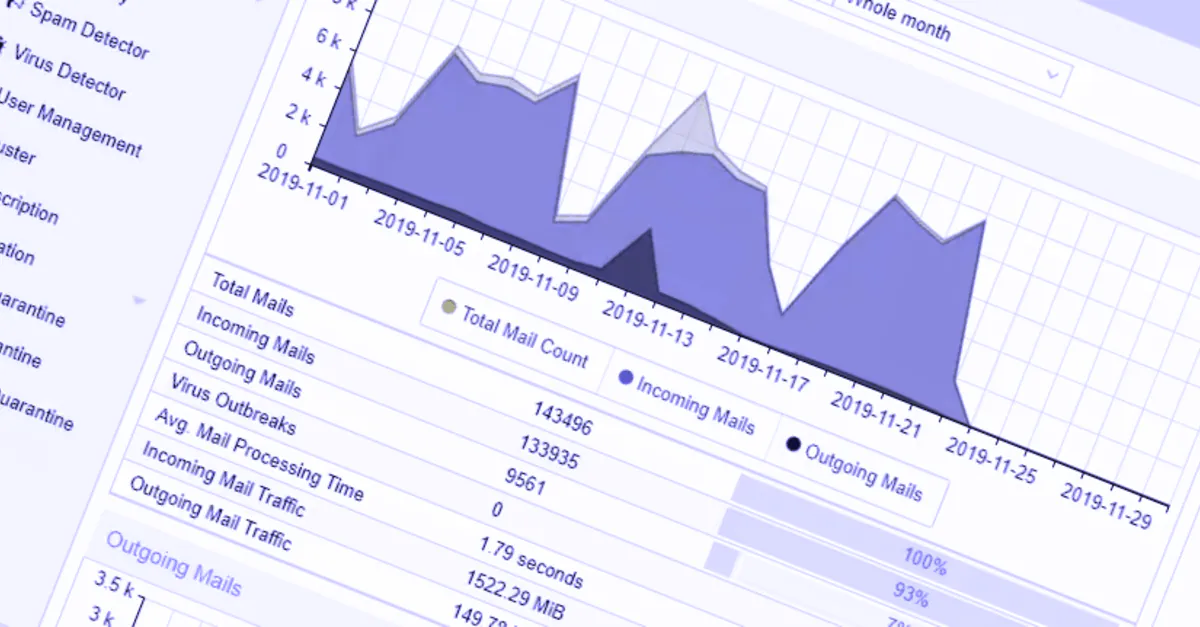
Case study: Proxmox Mail Gateway in front of an existing mail server – RBL lists, a local DNS resolver, custom SpamAssassin rules, 98% of spam filtered.
We write the articles from what we learn on our own projects: cloud migrations, running Proxmox clusters and cPanel servers, introducing CI/CD pipelines and our work for hosting providers. Where an article shows a setting or a command, that is how we use it ourselves.
We review the news posts from time to time. If a statement is out of date, we correct it in the text and cite the source; the “Updated” date at the top of such articles shows when we last reviewed them.